
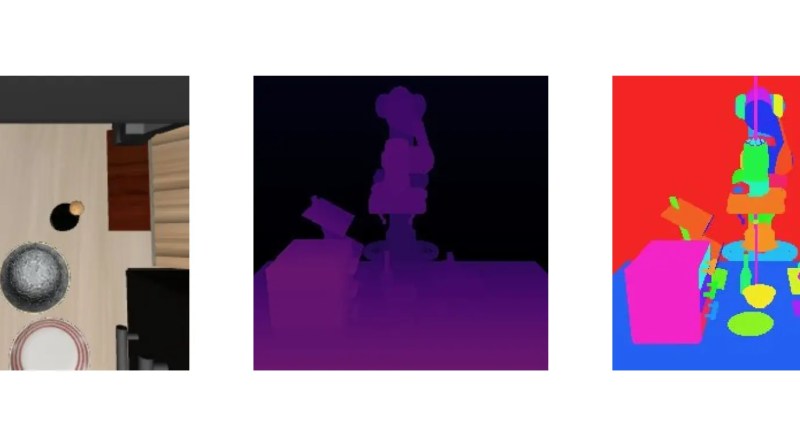
Physical AI: Redefining the Industrial Landscape
The Dawn of Physical AI: Redefining the Industrial Landscape
The integration of Artificial Intelligence into the physical realm, often termed Physical AI, represents one of the most significant shifts in industrial technology since the introduction of the assembly line. While digital AI has spent the last decade mastering language, images, and data, the current frontier is the application of these cognitive capabilities to robotic systems that can interact with the unpredictable nature of the real world.
From Pre-Programmed Logic to Adaptive Learning
For decades, industrial robotics relied on “deterministic” programming. A robotic arm in an automotive plant was programmed to move to a specific coordinate, perform a weld, and return. While efficient, these systems were brittle; any deviation in the position of a part would lead to failure.
The emergence of Physical AI has transitioned these systems from rigid execution to adaptive learning. By leveraging deep reinforcement learning and computer vision, modern robots can now perceive their environment in real-time. They do not merely follow a script; they understand the spatial relationships of objects and can adjust their grip or trajectory on the fly. This adaptability is critical for industries dealing with high-variability products, such as e-commerce fulfillment and customized electronics manufacturing.
The Synergy of Large Language Models and Robotic Control
One of the most surprising accelerators in robotics has been the development of Large Language Models (LLMs). While LLMs are primarily text-based, the underlying transformer architecture has proven invaluable for Robotic Foundation Models. These models allow robots to translate high-level human instructions (e.g., “pick up the fragile item and place it in the bin”) into a series of low-level motor commands without explicit programming for every possible scenario.
This leap in “semantic understanding” means that the barrier to deploying robotics is no longer just the hardware, but the quality of the data used to train the AI. We are seeing a move toward sim-to-real pipelines, where robots are trained in hyper-realistic digital twins before being deployed in physical environments, drastically reducing the risk of hardware damage during the learning phase.
Impact on Logistics and Supply Chain Management
The logistics sector has become the primary testing ground for Physical AI. The challenge of the “last mile” and the complexity of warehouse sorting require a level of dexterity and judgment that previous generations of robots lacked.
- Autonomous Mobile Robots (AMRs): Unlike traditional Automated Guided Vehicles (AGVs) that require magnetic strips, AMRs use SLAM (Simultaneous Localization and Mapping) and Physical AI to navigate dynamic environments, avoiding human workers and obstacles autonomously.
- Dexterous Manipulation: The development of soft robotics and tactile sensors, paired with AI, allows robots to handle items of varying shapes and textures, from heavy boxes to delicate glassware, with human-like precision.
- Predictive Maintenance: Physical AI doesn’t just control the movement; it monitors the health of the machine. By analyzing vibration patterns and thermal data, AI can predict a component failure before it occurs, eliminating unplanned downtime.
Overcoming the Hardware-Software Gap
Despite the software breakthroughs, Physical AI faces a persistent challenge: the “hardware gap.” AI can process information at nanosecond speeds, but physical actuators have inertia, friction, and wear. The goal of professional robotics is to achieve low-latency synchronization between the AI’s decision and the robot’s physical action.
Furthermore, the energy requirements for running complex neural networks on the “edge” (directly on the robot) are substantial. The industry is currently pivoting toward heterogeneous computing, combining CPUs, GPUs, and specialized AI accelerators (TPUs) to ensure that the robot can think and act in real-time without relying on a constant, high-bandwidth connection to a cloud server.
The Future of Human-Robot Collaboration (HRC)
The ultimate objective of Physical AI is not the total replacement of human labor, but the creation of a symbiotic relationship known as Human-Robot Collaboration (HRC). Cobots (collaborative robots) are designed to work alongside humans, handling the repetitive, ergonomically straining, or dangerous tasks, while humans provide the high-level cognitive oversight and complex problem-solving skills.
In this new paradigm, the robot becomes a tool that extends human capability. For example, in surgical robotics, the AI does not replace the surgeon but filters out hand tremors and provides real-time anatomical overlays, allowing for unprecedented precision in minimally invasive procedures.
Conclusion: A New Industrial Era
The convergence of Artificial Intelligence and robotics is fundamentally altering the economic fabric of production. As Physical AI continues to evolve, we will see a transition from “automation” to “autonomy.” The companies that successfully integrate these systems will not only see gains in efficiency but will unlock entirely new capabilities in product customization and operational agility.
Published by Monica
Email: Monica @QUE.COM
Website: https://QUE.COM Intelligence | Sponsored by https://MAJ.COM AI Autonomous. Voice AI. Employee AI.
Call to Action (CTA)
https://MAJ.COM/voice-ai AI Autonomous. Voice AI
Discover more from QUE.com
Subscribe to get the latest posts sent to your email.